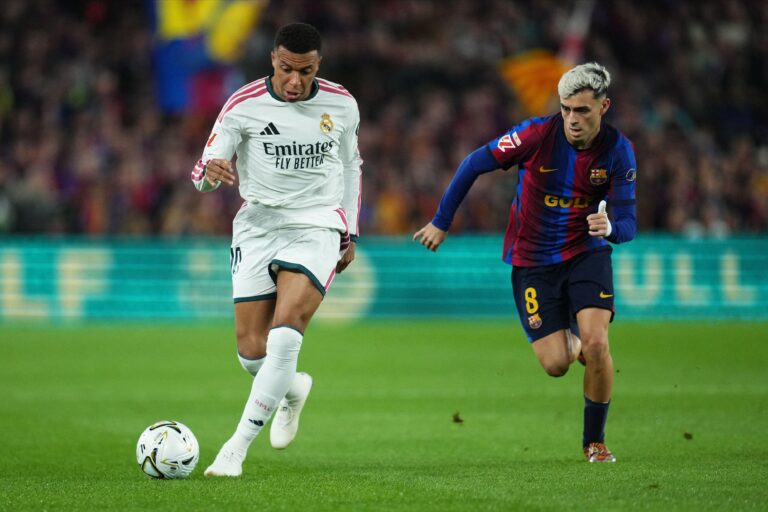

Portugal’s 2026 FIFA World Cup was once framed around the question of whether the team could win the tournament. The completed result gives a clear answer: Portugal reached the Round of 16, where Spain beat them 1-0 in Dallas with a 90th-minute Mikel Merino goal. Spain went on to win the World Cup, but Portugal’s campaign ended before the quarter-finals.
FIFA’s Portugal v Spain report supplies the central facts: Spain won 1-0, Merino scored in the 90th minute, and Spain progressed to the last eight. That late goal is not merely a dramatic detail. It defines the difference between Portugal reaching the quarter-finals and leaving the tournament after a closely contested knockout match.
An expanded tournament still leaves little margin
The 2026 World Cup’s 48-team format gave teams an added elimination round. Advancing from the group stage did not place a side directly in the Round of 16; it first had to negotiate the Round of 32. This created more opportunity for a contender to build momentum, but it also added another match in which a single moment could end the campaign.
Portugal reached the Round of 16, which is an important baseline. It means the team successfully came through the opening stage and then progressed once in the knockouts. It does not justify converting a pre-tournament expectation into a claim of title-level success. The World Cup is judged by the final ladder, and Portugal did not reach the final eight.
The Spain match demonstrates the narrow margin that can decide knockout football. The teams were level until the final minute, when Merino scored and left Portugal almost no time to restore parity. Portugal remained competitive throughout the match, but one late attacking sequence settled which side advanced.
Spain were the decisive opponent
Portugal met Spain at Dallas Stadium on 6 July. FIFA records Ferran Torres’s role in creating the winning moment and Merino’s 90th-minute finish. The report says Spain had been building during the match and found the breakthrough late. The outcome placed Spain in the quarter-finals, while Portugal were eliminated.
This was not a fixture against a team that later disappeared from the tournament. FIFA’s Spain schedule records further wins over Belgium and France before the 1-0 extra-time victory against Argentina. FIFA’s final standings confirm Spain as champions, while its championship review places the Portugal match within the full knockout route.
The later Spanish success offers context, but it must not be misused. Portugal lost to the eventual champions; that explains the quality of the opposition, not the result by itself. Football tournaments contain many routes and match states. The factual point is that Portugal were one late goal from taking the tie beyond the 90th minute, but Spain converted their opportunity and then completed a title-winning run.
What the result does and does not say about Portugal
It is fair to say that Portugal did not fulfil the original title-winning possibility. It is not fair to treat that as proof that the squad or its players were incapable of competing. The match was 0-0 until the 90th minute, and the tournament exit occurred in a direct meeting with the side that became champion.
The narrow margin was not a substitute for progression. Portugal were eliminated in the Round of 16 and did not advance into the quarter-final group. Their performance kept the contest level for 89 minutes, while the result still placed Spain in the next round.
Portugal’s campaign consequently has a clear conclusion: Round of 16 elimination by a 1-0 scoreline against Spain. The team’s route, the late timing of the goal and the quality of the eventual champions provide the relevant context around that result.
The late goal as the turning point
Merino’s goal is the key event because the match’s timing left Portugal with almost no scope to answer. A goal early in a knockout match changes tactics but leaves a long period for recovery. A goal in the 90th minute can decide the tournament immediately. FIFA’s report therefore makes the timing as relevant as the score itself.
This does not require a counterfactual about what would have happened in extra time. Spain’s late goal made that question unnecessary. Portugal did not receive the next phase of the game; Spain moved forward and Portugal’s World Cup concluded.
The final record
Portugal reached the Round of 16 at the 2026 FIFA World Cup and lost 1-0 to Spain at Dallas Stadium on 6 July. Mikel Merino scored in the 90th minute. Spain subsequently won the tournament, defeating Argentina after extra time in the final.
Portugal had a viable route until a decisive late moment, but did not win the World Cup or reach the quarter-finals. The 1-0 scoreline preserves both the competitive closeness of the match and the finality of the elimination.
Sources
- FIFA: Portugal 0-1 Spain match report — score, scorer, venue and Round of 16 outcome.
- FIFA: Spain’s World Cup schedule — Spain’s route including the Portugal match.
- FIFA: Final tournament standings — Spain’s championship and completed tournament context.
- FIFA: Spain men and women make history — Spain’s knockout route and final victory.
Publisher
The BW Game Hub Sports Analysis Unit is the senior sports news desk at BW Game Hub, overseeing daily sports news coverage, football market analysis and legal updates across international jurisdictions. With a background in sports journalism and market research, the unit tracks player movements, league developments and operator news to bring readers real-time, verified insights.