
George Russell led second practice for the 2026 Las Vegas Grand Prix on Thursday night, producing a late lap of 1:47.272 to beat Alpine’s Pierre Gasly by just 0.071 seconds. Ferrari’s Charles Leclerc finished third, 0.333 seconds behind, after setting the standard for much of the session.
The narrow margins offered only a partial picture of the competitive order. Rain prevented any timed laps in opening practice, and the circuit remained unsuitable for slick tyres throughout the second session, leaving teams without dry-weather running ahead of a weekend expected to improve.
Late Improvements Put Russell and Gasly Ahead
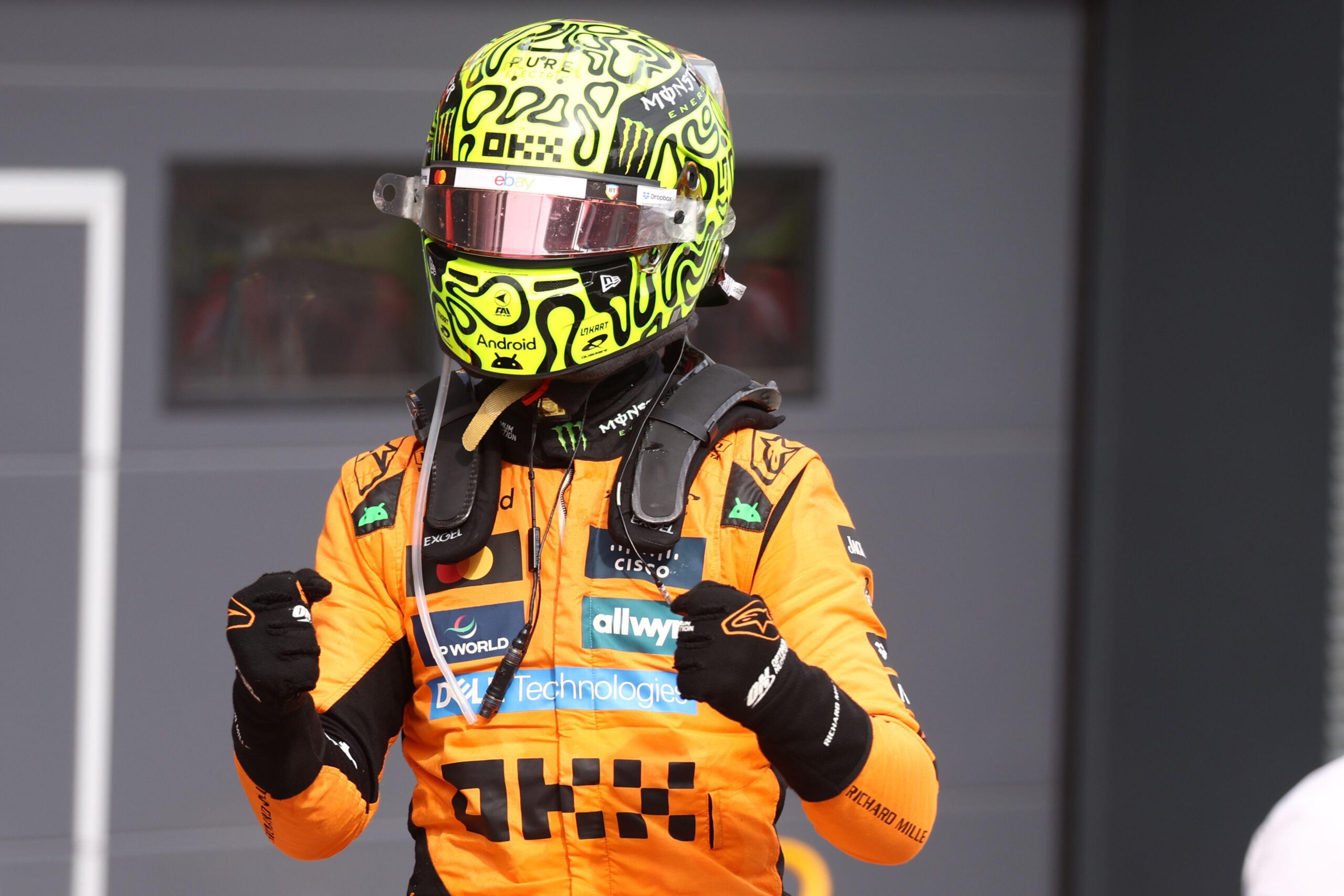
Lando Norris showed strong early pace as drivers moved from full wet tyres to intermediates, before Leclerc became increasingly prominent as the racing line dried. The Ferrari driver eventually lowered the benchmark to 1:47.605, a time that remained unbeaten until the closing stages.
Russell made his decisive improvement as the chequered flag appeared, while Gasly completed his best lap even later to secure second. Red Bull’s Isack Hadjar finished fourth after a promising attempt to improve was compromised by traffic from Oliver Bearman’s Haas.
A brief red flag interrupted the final part of the session so marshals could remove plastic debris blown onto the circuit. Running resumed with approximately six minutes remaining, creating a final opportunity to exploit the improving surface.
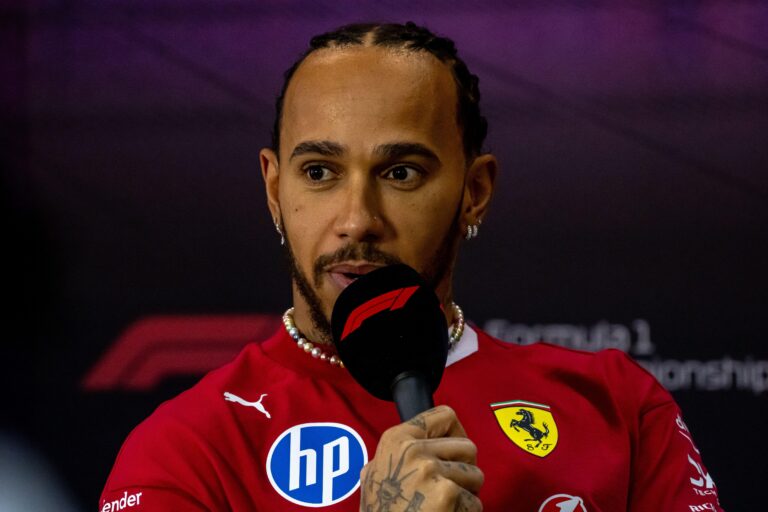
Oscar Piastri completed the top five for McLaren, followed by Ferrari’s Lewis Hamilton and Norris. Newly crowned world champion Kimi Antonelli was eighth for Mercedes, ahead of Franco Colapinto’s Alpine and Fernando Alonso’s Aston Martin. Max Verstappen finished 13th after limited late running, during which he reported problems with his car.
Russell Questions Mercedes’ Underlying Pace
Despite finishing fastest, Russell was cautious about what Mercedes could take from the result. He attributed his position largely to the timing of his final run and identified McLaren and Leclerc as particularly competitive during the session.
“McLaren looked exceptionally fast,” Russell said, explaining that Mercedes benefited because “we just got the lap in when the track was at its driest”.
He also acknowledged that both Mercedes drivers had struggled to reproduce their wet-weather competitiveness from the previous round in Brazil. The changing conditions complicated comparisons, but Russell felt there were still aspects of the performance that required investigation.
Mercedes trackside engineering director Andrew Shovlin provided further detail, saying the team had difficulty bringing the front and rear tyres into their optimal temperature ranges together. That made it harder to establish a consistent balance as grip levels changed almost lap by lap.
For Russell, the weekend also carries significance beyond the practice classification. The 2024 Las Vegas winner arrived third in the drivers’ standings, 17 points behind Verstappen, with three races remaining in the contest for second place behind Antonelli.
Cold Conditions Make Tyre Preparation Crucial
Although the forecast points towards dry qualifying and race sessions, low temperatures remain a central concern. Pirelli recorded an air temperature of approximately 11°C during second practice, with the track around 15°C.
The tyre supplier explained that damp sections, slippery painted road markings and the difficulty of warming slicks prevented a switch to dry-weather tyres, even as the racing line became noticeably drier. The session therefore provided little direct evidence about how the race compounds would perform.
The Las Vegas layout compounds that problem. Its long straights and cold evening conditions make generating and retaining tyre temperature difficult. Williams’ technical preview identified three straight-line-mode zones for 2026, including the extended section approaching Turn 14, and highlighted tyre preparation as a major consideration for qualifying.
Mercedes must also establish whether graining will affect race performance. Shovlin said the remaining practice session would need to cover car balance, qualifying preparation and longer runs, with particular attention to degradation in the cooler conditions expected for the Grand Prix.
Engine Penalties Add Another Layer to the Weekend
Several drivers will enter qualifying knowing that their starting positions will be affected by power-unit penalties.
Piastri faces a 10-place grid drop after taking a fifth internal combustion engine following a reliability issue, exceeding the permitted seasonal allocation of four. Both McLaren drivers will also use Mercedes’ revised turbocharger, although those changes carry no additional penalties because Piastri and Norris remain within their respective turbo allowances.
Carlos Sainz will receive a 10-place penalty because the upgraded turbo fitted to his Williams is his fifth of the season. Team-mate Alex Albon will use the same specification without a grid drop, remaining within his allocation.
Antonelli also faces a penalty, dropping five places for taking his sixth internal combustion engine. His new turbo remains within the permitted allowance. Aston Martin’s Lance Stroll will lose 10 positions following changes to his energy store and control electronics, while multiple component changes mean Bearman is due to start from the back of the grid.
Russell will retain his existing turbo specification after Mercedes judged the expected performance benefit insufficient to justify a grid penalty. The revised component forms part of the manufacturer’s development work towards 2027, with improvements to reliability and driveability among its objectives and only a modest immediate gain anticipated.
Final Practice Becomes a Compressed Preparation Session
Hamilton described the absence of slick-tyre running as a challenge shared across the field, with teams needing to adapt quickly once dry conditions arrive.
“Obviously none of us have put the slicks on,” he said.
Ferrari deputy team principal Jerome d’Ambrosio indicated that the team would need to fit both qualifying simulations and longer race runs into the remaining hour of practice. That leaves little time to establish a dry-weather setup, assess tyre behaviour and make adjustments before the fight for grid positions begins.
Publisher
The BW Game Hub Sports Analysis Unit is the senior sports news desk at BW Game Hub, overseeing daily sports news coverage, football market analysis and legal updates across international jurisdictions. With a background in sports journalism and market research, the unit tracks player movements, league developments and operator news to bring readers real-time, verified insights.