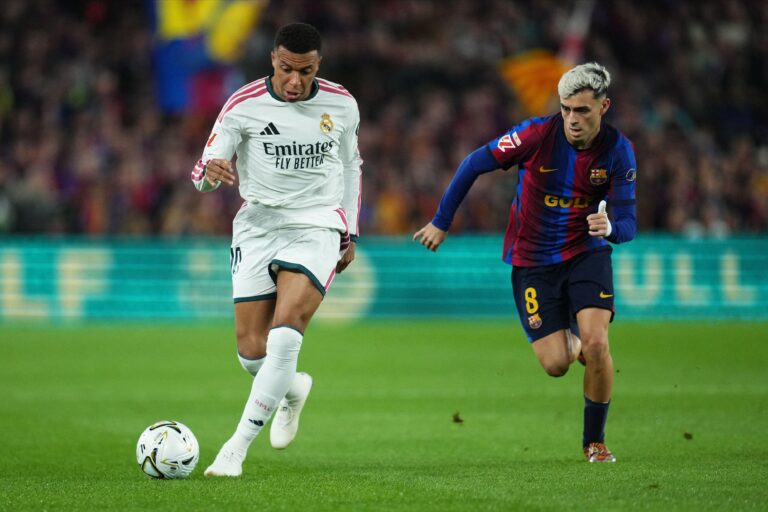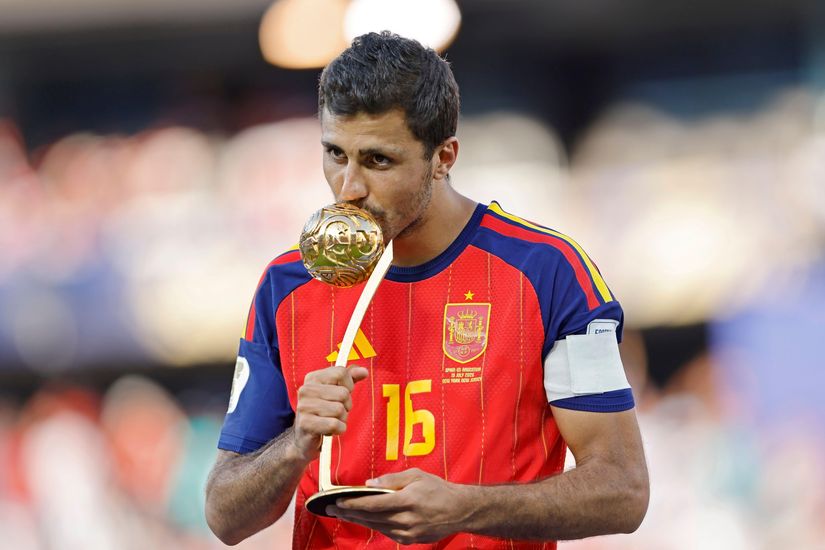

Spain became FIFA World Cup champions for the second time by beating Argentina 1-0 after extra time in the 2026 final. The decisive moment arrived in the 106th minute, when substitute Ferran Torres finished a move created by Nico Williams and Pedro Porro. FIFA’s final report confirms the score, scorer, minute and the final’s venue at New York New Jersey Stadium.
Spain had won their first men’s World Cup in 2010 by defeating the Netherlands after extra time. Sixteen years later, they again required extra time to claim the trophy, this time against the reigning champions. FIFA’s match report draws that parallel directly: both of Spain’s men’s world titles were secured by a single goal after 90 goalless minutes.
The final in context
FIFA’s report describes Spain as the side that controlled much of the match, while Argentina’s Emiliano Martínez made several saves. Spain created early attempts through Lamine Yamal and later pressed for openings through Mikel Oyarzabal, Marc Cucurella, Pau Cubarsí, Pedri and Williams. Argentina defended deep and remained in the contest through normal time.
The score was still 0-0 at the end of 90 minutes. Argentina then lost Enzo Fernández to a second yellow card in added time, but that did not immediately settle the match. In extra time, Martínez continued to keep Spain out before the winning move. Williams headed Porro’s cross down at the far post and Torres struck first time into the roof of the net.
The exact sequence matters. The official score is Spain 1-0 Argentina, and Torres is credited with the goal in the 106th minute. Describing it simply as an extra-time winner retains the essential fact without adding unverified claims about a player’s emotions, a team’s tactical intentions or an argument after the final whistle.
Spain’s second men’s world title
Spain’s first World Cup title came in South Africa in 2010. FIFA’s 2026 final report draws the parallel directly: Spain again found a final answer in extra time. The 2026 achievement gave the country two men’s titles and joined its women’s World Cup win in 2023.
FIFA’s Spain men and women history report says the 2026 triumph made Spain the first country to hold the reigning men’s and women’s World Cup titles at the same time. It also explains that Spain and Germany are the only nations to have won both the men’s and women’s World Cups. That is a national-team record; it should not be conflated with the result of one men’s final.
The final report adds two tournament-specific statistics. Spain conceded one goal across the competition, identified as the lowest total for a World Cup-winning team in one edition. Goalkeeper Unai Simón recorded seven clean sheets, a tournament record according to FIFA. Those figures describe the full Spanish campaign, not just the 120 minutes against Argentina.
The route to New York New Jersey
Spain and Argentina reached the final after taking different routes through the expanded tournament. FIFA’s final preview identified them as the champions of Europe and South America respectively. It also recorded Spain’s group-stage draw with Cabo Verde, 4-0 win over Saudi Arabia and 1-0 victory over Uruguay before their knockout progress.
Spain’s semi-final supplied another key result. They beat France 2-0 in Dallas, with Mikel Oyarzabal scoring a penalty in the 22nd minute and Pedro Porro adding the second in the 58th. FIFA’s France-Spain report documents that win and their progression to the final.
Argentina entered as defending champions and had scored 19 goals on their way to the final, according to FIFA. That made the pairing a contest between the title holders and a Spain side that had conceded the fewest goals. The final did not need a high scoreline to be significant: a single, precisely timed goal decided it.
What the final meant
Spain won the 2026 FIFA World Cup. They beat Argentina 1-0 after extra time on 19 July at New York New Jersey Stadium. Ferran Torres, who entered as a substitute, scored in the 106th minute. Those are the core match facts.
The wider legacy claims are also clear when they come from the competition organiser: it was Spain’s second men’s title, and the country simultaneously held the men’s and women’s crowns. Anything beyond that—such as declaring a permanent hierarchy among generations—belongs to opinion, not a match report.
Sources
- FIFA: Spain 1-0 Argentina final report — score, scorer, timing, match account and campaign statistics.
- FIFA: Spain and Argentina final preview — finalists’ tournament routes.
- FIFA: France 0-2 Spain semi-final report — Spain’s semi-final result.
- FIFA: Spain men and women make World Cup history — national-team title context.
Publisher
The BW Game Hub Sports Analysis Unit is the senior sports news desk at BW Game Hub, overseeing daily sports news coverage, football market analysis and legal updates across international jurisdictions. With a background in sports journalism and market research, the unit tracks player movements, league developments and operator news to bring readers real-time, verified insights.