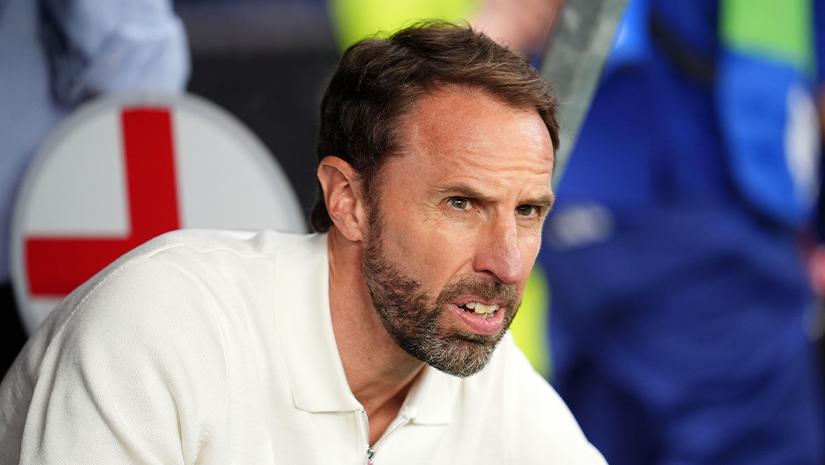

Thomas Tuchel will remain England men's senior head coach through UEFA EURO 2028, according to the Football Association. The FA announced the extension on 12 February 2026 and said it would keep him in charge until after the tournament. That confirmed agreement is the clearest way to understand his England future.
It is important to separate that official decision from dramatic match narratives. The extension was announced months before the 2026 World Cup concluded. The FA's statement does not describe it as a response to a World Cup defeat, and it does not attribute the decision to any particular match against Argentina. A factual account should retain the confirmed contract timeline rather than creating a cause that the governing body has not stated.
From the original appointment to the extension
The FA appointed Tuchel in October 2024. Its original announcement said he had signed an 18-month contract and that he and assistant Anthony Barry had been identified through the FA's recruitment process. The stated focus was to give England the best possible chance at the 2026 World Cup.
That starting point matters. It shows that the initial appointment was constructed around the World Cup cycle, not around a promise of a EURO 2028 tenure. It also gives a public benchmark for the later decision: the FA was able to announce a different term in 2026 rather than relying on suggestions that an extension had been automatic or verbally agreed.
The February 2026 extension statement says Tuchel's deal would run until 2028 and cover the period after UEFA EURO 2028. FA chief executive Mark Bullingham said the organisation and coaching team had reviewed the partnership after England secured World Cup qualification, then agreed to continue. That is the public explanation for the extension.
What the extension actually confirms
The agreement confirms the head coach's expected tenure, not the outcome of any future tournament. It supplies continuity across the 2026 World Cup and the next European Championship, which UEFA has scheduled as EURO 2028. It does not confirm a particular squad, a preferred formation, a tournament result or every member of the coaching staff through the whole period.
This is a useful distinction for supporters. A long-term coaching agreement can make planning easier, but international football still turns on player availability, qualification, fixtures and performance. The FA's words describe a desire for clarity before a major tournament. They do not promise that continuity alone will produce a trophy.
The statement also helps prevent a common misunderstanding about dates. "Until 2028" is not the same thing as "until the beginning of EURO 2028." The FA specifically says the extension keeps Tuchel in charge until after the competition. Any later change would need to be announced separately; it should not be assumed from an old contract date or a pre-tournament rumour.
The World Cup claim in context
England's World Cup campaign is a matter for official competition records and the FA's match reporting. It should not be used as a shortcut to explain an employment decision when the two dates do not match. The extension was formally public in February. Therefore, a headline presenting it as a commitment made after a later World Cup result reverses the established timeline.
The same caution applies to a claimed "heartbreak against Argentina." Without an FA or FIFA record establishing the specific match and the claimed significance, it should not be repeated as background fact. Football reporting gains credibility when it distinguishes a confirmed score and tournament stage from the emotional language that can surround them.
That does not diminish the stakes of international football. It simply ensures that readers can see what is documented. The FA announced a coach, an 18-month initial term, an extension following qualification and a new endpoint after EURO 2028. Those are the key facts needed to assess Tuchel's position.
Why the FA's wording matters
Federation announcements are unusually valuable in coach-contract stories because they tell readers who is responsible for the appointment and how long it is intended to last. They also provide a stable reference when old articles remain in search results after circumstances change.
In this case, the original FA release provides the entry point and the later FA statement supplies the revised term. Neither needs embellishment with unsupported quotes or transfer-style certainty. The agency lies with the FA and the coach: the governing body says it wanted continuity, and its statement says Tuchel and his team wanted to stay.
Readers should also be careful not to make the extension a verdict on every earlier result. The FA framed it as a strategic decision about England's upcoming major tournaments. Results will continue to shape public opinion, but the official contract statement is not a retrospective scorecard.
What to watch next
The next meaningful update will be a dated FA announcement: squad selections, staff appointments, fixtures, qualification news or any amendment to the agreement. UEFA's tournament channels will provide the competition structure and schedule. Those direct sources are preferable to recycled claims about private meetings or alleged promises.
For now, the record is settled on one central point. Thomas Tuchel's England contract has been extended through UEFA EURO 2028, and the extension was announced before the World Cup's conclusion—not as a reaction to an unverified post-match narrative.
Sources
- The FA: Thomas Tuchel contract extension through 2028 — official extension, timing and FA rationale.
- The FA: Tuchel appointed England head coach — original 18-month agreement and appointment process.
- UEFA: EURO 2028 — organiser context for the tournament named in the extension.
Publisher
The BW Game Hub Sports Analysis Unit is the senior sports news desk at BW Game Hub, overseeing daily sports news coverage, football market analysis and legal updates across international jurisdictions. With a background in sports journalism and market research, the unit tracks player movements, league developments and operator news to bring readers real-time, verified insights.