

18+. New customers only. T&Cs apply. Please gamble responsibly.
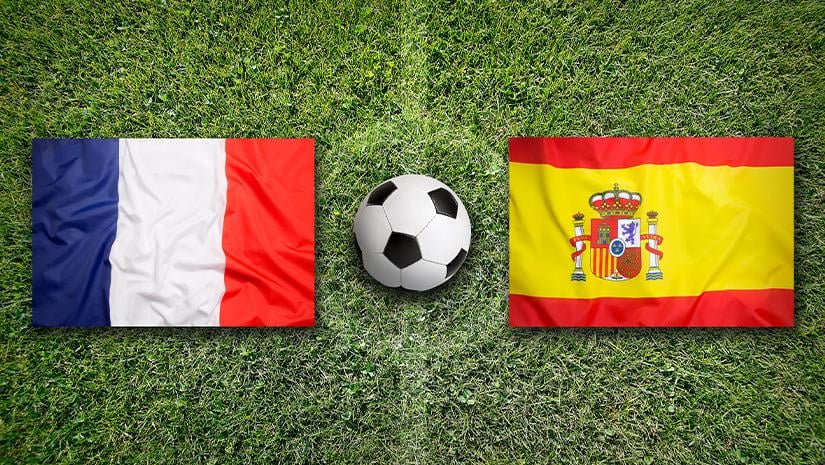
Spain delivered a commanding tactical performance to defeat France 2-0 and secure their place in only the second FIFA World Cup final in the nation’s history.
Luis de la Fuente’s side entered Tuesday’s semi-final without the same attention that had followed France throughout the tournament. However, Spain’s structure, midfield authority and collective discipline proved far more influential than the individual attacking talent available to Les Bleus.
France had arrived as favourites after progressing confidently through the competition, with Kylian Mbappé, Ousmane Dembélé and Michael Olise forming one of the World Cup’s most dangerous attacking units. Spain prevented that trio from imposing itself, limiting Didier Deschamps’ team to only three shots on target and an expected-goals figure of just 0.3.
Mikel Oyarzabal opened the scoring from the penalty spot in the 22nd minute after Lucas Digne fouled Lamine Yamal inside the area. Pedro Porro doubled Spain’s advantage in the 58th minute following an intelligent exchange with Dani Olmo.
Those were Spain’s only two efforts on target, giving La Roja a perfect conversion rate from their shots that tested the goalkeeper. Yamal also had an effort disallowed for offside, while France were unable to convert any of their limited opportunities despite needing to chase the game for more than an hour.
The result extended Spain’s unbeaten sequence to 37 international matches, equalling Italy’s record for the longest undefeated run by a European men’s national team. It was also Spain’s eighth consecutive knockout-stage victory at a major tournament, establishing a new European record.
Spain will now face either Argentina or England in Sunday’s final, while France must regroup for the third-place play-off.
Spain’s Structure Neutralises France’s Star Attack
France’s greatest strength throughout the tournament had been the individual quality of their forward players. Against Spain, however, those attacking threats were repeatedly isolated by an organised defensive shape and an aggressive counter-press.
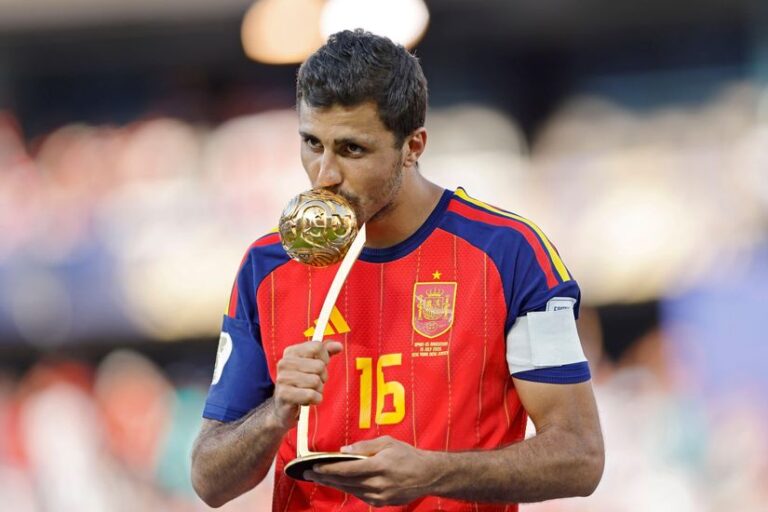
Spain controlled possession through the midfield combination of Rodri, Fabián Ruiz and Dani Olmo, whose movement between the lines created a consistent numerical advantage against France’s central pairing.
Olmo operated as a roaming attacking midfielder, frequently dropping into deeper areas to receive possession. His positioning forced France’s defenders to decide whether to remain in shape or follow him away from the back line.
When a centre-back stepped forward, Olmo’s close control and ability to combine quickly with nearby teammates allowed Spain to play through the pressure. When France remained compact, Spain circulated the ball patiently until space appeared around the full-back areas.
It was a tactical problem France never fully resolved. Despite trailing from the 22nd minute, Les Bleus finished the match with only three efforts on target and generated 0.3 expected goals, illustrating how rarely they created clear scoring opportunities.
France’s celebrated front line was therefore restricted to an average of just 0.1 expected goals for every shot on target. Mbappé, Dembélé and Olise were unable to produce a goal or an assist between them, despite collectively entering the semi-final as the central focus of France’s attacking system.
Former Republic of Ireland and Manchester United captain Roy Keane described the contrast as one between a functioning team and a collection of talented individuals.
“France were not playing as a team,” Keane said during ITV’s coverage. “Brilliant individuals not playing as a team. Spain have been absolutely brilliant — an absolute joy to watch.”
Former England striker Ian Wright offered a similar assessment, describing Spain’s victory as “structure over individuality”.
Porro’s Goal Exposes France’s Defensive Weakness
Spain’s second goal illustrated the tactical superiority that shaped the contest.
France defended primarily in a 4-4-1-1 block, with their wide players protecting zones rather than consistently following Spain’s overlapping runners. De la Fuente’s side exploited that approach by committing both wingers and full-backs into advanced positions.
That frequently left the French full-backs responsible for defending two players.
For the second goal, Pedro Porro released the ball before continuing his run into the space behind France’s midfield line. Désiré Doué failed to follow the right-back’s movement, allowing Porro to receive Olmo’s return pass and finish decisively in the 58th minute.
The goal arrived 36 minutes after Oyarzabal’s opener and gave Spain control of both the scoreline and the tactical direction of the contest. It was also a rare example of a full-back finishing a central combination after starting the move from a deeper wide position.
Spain’s willingness to attack through their full-backs stretched France’s defensive structure and prevented Mbappé and Dembélé from remaining in dangerous counter-attacking positions.
The Spanish counter-press was equally important. Whenever possession was lost, nearby players immediately closed passing lanes and pressured the ball, denying France the time required to release their forwards into open space.
Former France defender Gaël Clichy acknowledged that Spain had controlled every phase of the match.
“It’s not an amazing Spanish side — we’ve seen better,” Clichy told BBC Radio 5 Live. “But the best team won. All the phases were controlled by Spain.”
Patrick Vieira, a World Cup winner with France in 1998, also credited Spain’s collective organisation and highlighted their success in restricting Olise’s influence.
Spain Peak at the Decisive Moment
Spain’s route to the final has not always been convincing.
Their campaign began with a goalless draw against World Cup debutants Cape Verde. They later required a 91st-minute winner to defeat Portugal in the round of 16 and an 88th-minute goal to overcome Belgium in the quarter-finals.
Against France, however, Spain produced their most complete performance of the tournament.
They defended with composure, controlled the centre of the pitch and converted both of their shots on target. Their 100 per cent shot-on-target conversion rate contrasted sharply with France, who failed to score from three attempts on target.
France’s acclaimed attacking unit was unable to create sustained pressure, while Spain recorded their sixth clean sheet in seven matches. La Roja have conceded only once throughout the tournament, meaning they have prevented their opponents from scoring in approximately 86 per cent of their matches.
Spain have now completed 630 minutes of regulation football across seven World Cup matches while allowing only one goal. Their six shutouts have given them a clean sheet, on average, every 105 minutes of regulation play.
The 0.3 expected goals conceded against France was also the lowest figure recorded by a team in a World Cup semi-final since Brazil restricted Sweden to the same total in 1994.
Spain’s defensive record is particularly notable because four of their six clean sheets have come during the knockout stages, when the quality of opposition and consequences of defensive mistakes increase considerably.
Former Premier League champion Chris Sutton said France had been comprehensively outplayed.
“Spain scalped France — they flattened France,” Sutton told BBC Radio 5 Live. “We have given France so much praise in this tournament, but they were swatted aside by silky Spain.”
Yamal’s Influence Goes Beyond Goals
Lamine Yamal has scored only once during the tournament, but his contribution cannot be measured solely through goals.
The teenager played a direct role in the opening goal by drawing the foul from Digne that resulted in Oyarzabal’s 22nd-minute penalty. He also found the net himself, although the effort was ruled out for offside.
His positioning, ball retention and ability to occupy defenders remained central to Spain’s attacking structure. His presence created space for midfield runners and overlapping full-backs, while his technical security helped Spain maintain possession in advanced areas.
Yamal has never lost an international match for Spain. He has started 12 combined matches across the World Cup and European Championship, with Spain winning every one.
That represents the best 100 per cent winning record of any European player when starting matches across the two competitions.
Several of Yamal’s teammates also possess remarkable tournament records. Aymeric Laporte has made 22 combined World Cup and European Championship appearances without defeat, while Oyarzabal has played 20, Fabián Ruiz 16 and Mikel Merino 14.
Those figures reflect the consistency of a Spanish team that has developed a strong winning culture under De la Fuente.
De la Fuente’s Long-Term Project Reaches Its Biggest Stage
De la Fuente’s appointment in December 2022 was initially greeted with uncertainty.
Unlike several of his predecessors, he did not arrive with an extensive record in elite club management. His experience had been built primarily within Spain’s youth structure, where he coached the country’s under-19, under-21 and under-23 teams.
That background has become one of his greatest strengths.
Many members of the current squad previously worked with De la Fuente at youth level. Mikel Merino, Rodri and Unai Simón were part of the Spain team that won the European Under-19 Championship in 2015, while players including Oyarzabal and Dani Olmo also developed within the same national pathway.
The familiarity between the coach and his players has helped create a team based on trust, continuity and a shared tactical understanding.
De la Fuente led Spain to the UEFA Nations League title in 2023 before winning Euro 2024. He is now one victory away from adding the World Cup to that sequence of international honours.
Spain’s victory over France also moved De la Fuente’s team to eight successive knockout-stage victories at major tournaments. That run includes their successful Euro 2024 campaign, the Nations League triumph and their progression through the 2026 World Cup.
“We’ve recaptured the spirit of 2010,” De la Fuente said after the semi-final. “The character of this team is evident in the fact that those who didn’t play have stayed behind to train after the match.”
The Spain coach said the team’s progression had been built on effort, talent, sacrifice and a constant attempt to improve.
Echoes of Spain’s 2010 World Champions
Spain’s only previous World Cup title came in South Africa in 2010, when Andrés Iniesta scored the decisive extra-time goal against the Netherlands.
The current team does not replicate that generation player for player, but the underlying principles remain familiar: positional discipline, technical midfielders, patient possession and immediate pressure after losing the ball.
Spain’s performance against France demonstrated how those traditional qualities have been adapted for a faster and more physically demanding era.
De la Fuente’s side can dominate through extended possession, but they can also attack directly, defend compactly and exploit transitions. That tactical range makes Spain more difficult to predict than teams that depend on one specific approach.
Their defensive record has provided the foundation. Six clean sheets in seven matches have allowed Spain to remain composed during close knockout fixtures, confident that one decisive attacking moment may be sufficient.
Spain have now outscored France 9-5 across their last three competitive meetings, following a 2-1 victory in the Euro 2024 semi-final, a 5-4 win in the 2025 Nations League and this 2-0 World Cup triumph.
The three consecutive victories mean France have not beaten Spain in a major tournament since their 3-1 World Cup round-of-16 victory in 2006.
England or Argentina Await in the Final
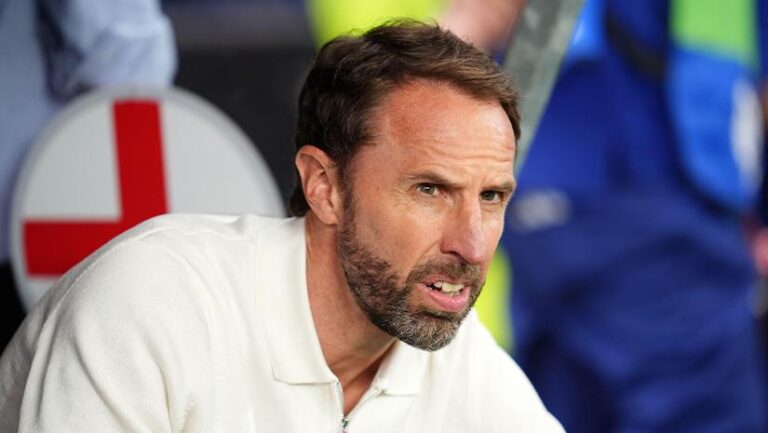
Spain will discover their final opponent after England face defending champions Argentina in the second semi-final.
An England victory would produce a repeat of the Euro 2024 final, which Spain won to secure their fourth European Championship title. A meeting with Argentina would place Spain against the reigning world champions and another team built around technically accomplished midfielders.
De la Fuente said he had no preferred opponent, although he reiterated that he considered England among the tournament favourites before the competition began.
Regardless of who advances, Spain are likely to approach the final with the same tactical identity. They will seek to control the ball, dominate midfield spaces and prevent their opponents from building attacks in transition.
France entered the semi-final with the tournament’s most celebrated attacking names. Spain left it with the more convincing team.
The statistics reflected that tactical superiority. Spain scored with both of their shots on target, conceded only 0.3 expected goals, recorded a sixth clean sheet in seven matches and extended their unbeaten sequence to 37 internationals.
Their victory was not based on one moment of individual inspiration. It was the product of organisation, patience and a collective understanding developed across several years.
One match now separates Spain from a second World Cup title — and after dismantling France with such authority, De la Fuente’s side will arrive in the final believing their strongest quality is the team itself.
Football supporters in Isle of Man closely follow the tactical battles, statistical trends and defining moments of major international tournaments. Spain’s victory offers fans in Isle of Man a compelling example of how organisation, midfield control and collective discipline can overcome a team filled with celebrated individuals. With six clean sheets in seven matches and a 37-game unbeaten sequence, attention across Isle of Man will now turn to whether De la Fuente’s side can complete their exceptional campaign by lifting the World Cup.
Stay tuned to Betway Gamehub to find out who will face Spain: will England bring the glory back for the first time since 1966, or will Argentina secure back-to-back World Cup titles?
Publisher
The BW Game Hub Editorial Team delivers expert football analysis, match insights, and data-driven coverage across global competitions.