

18+. New customers only. T&Cs apply. Please gamble responsibly.
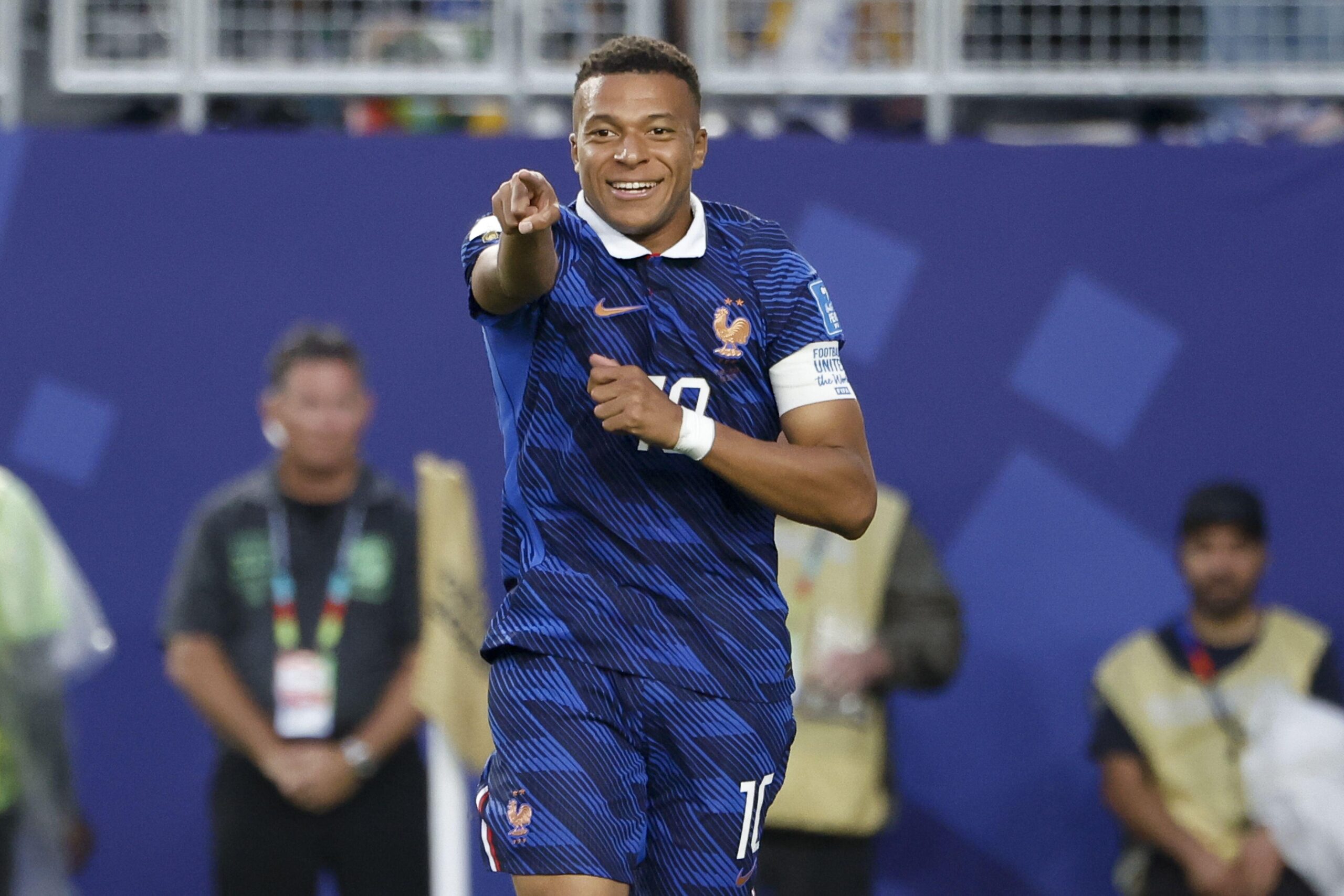
Kylian Mbappé recovered from an early penalty miss to deliver another decisive performance as France defeated Morocco 2-0 at Gillette Stadium in Boston, securing their place in the semi-finals of the 2026 FIFA World Cup.
The France captain opened the scoring shortly before the hour mark and then created Ousmane Dembélé’s second goal six minutes later, ending Morocco’s hopes of repeating their historic run to the last four at the 2022 tournament.
France’s statistical dominance reflected the comfortable nature of the victory. Les Bleus registered 22 attempts to Morocco’s five, produced nine shots on target compared with one and generated 2.96 expected goals against Morocco’s 0.31. France also created 19 chances, while the Atlas Lions managed only three.
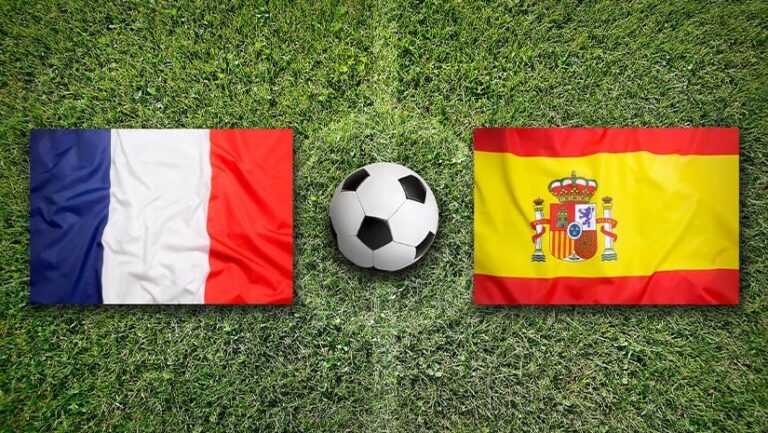
France will now face either Spain or Belgium in the semi-finals as Didier Deschamps’ side continue their pursuit of a third consecutive World Cup final appearance.
Bounou Denies Mbappé From the Spot
France controlled the contest from the opening stages and were presented with an early opportunity to take the lead when Mbappé won a penalty in the 28th minute.
A lengthy delay preceded the spot-kick, and the interruption appeared to affect the French forward’s concentration. Mbappé’s effort lacked its usual conviction, allowing Morocco goalkeeper Yassine Bounou to make the save and keep the Atlas Lions level.
Bounou’s intervention briefly offered Morocco hope, but France remained firmly in control of the attacking exchanges. Les Bleus accumulated approximately 1.87 expected goals during the first half alone, while Morocco registered only one attempt before the interval and failed to create a major scoring opportunity.
Dayot Upamecano failed to convert a promising early chance, while Désiré Doué was unable to make the most of another opening. Lucas Digne came closest to breaking the deadlock before half-time when his swerving long-range effort struck the crossbar.
France’s superior passing quality allowed them to sustain pressure despite having slightly less possession overall. Deschamps’ side completed 92% of their passes, compared with Morocco’s 89%, helping them circulate the ball patiently while waiting for openings in the Moroccan defensive structure.
Despite France’s missed chances, Morocco struggled to threaten at the opposite end. The absence of injured midfielder Ismaël Saibari reduced their ability to progress the ball through central areas, leaving the North African side increasingly reliant on defensive discipline.
Mbappé Responds After the Interval
France’s pressure finally produced a breakthrough in the 60th minute.
Désiré Doué found Mbappé inside the attacking third, and the France captain converted to make amends for his earlier penalty miss. The goal took his total to eight at the tournament and underlined his growing influence on France’s latest World Cup campaign.
Mbappé has also contributed three assists, giving him 11 direct goal involvements during the competition.
Morocco had little time to recover before France struck again.
Six minutes after opening the scoring, Mbappé turned provider, creating the opportunity from which Dembélé doubled the advantage. The second goal effectively ended the contest, with France managing the closing stages comfortably and denying Morocco any realistic route back into the match.
Mbappé finished the match with a goal, an assist, four chances created and approximately 1.30 expected goals. He also completed 26 of his 31 attempted passes during a highly influential 77-minute appearance.
Dembélé was equally important to France’s attacking control. In addition to scoring the second goal, he created two major chances, delivered four key passes and recorded approximately 0.70 expected assists. He also completed all three of his attempted crosses.
The result extended France’s unbeaten record against Morocco and repeated the 2-0 scoreline from their 2022 World Cup semi-final meeting in Qatar.
Match Statistics Highlight France’s Superiority
Although Morocco recorded 52% possession compared with France’s 48%, the Atlas Lions were unable to translate that territorial share into meaningful attacking production.
France registered:
- 22 shots compared with Morocco’s five
- Nine attempts on target compared with one
- 2.96 expected goals compared with 0.31
- 19 chances created compared with three
- 92% passing accuracy compared with 89%
- Five successful crosses compared with Morocco’s three
- 11 interceptions compared with eight
- 26 clearances compared with 21
The teams both won five corners, but France consistently created the better opportunities from open play. Morocco’s additional possession largely came in less dangerous areas, while France progressed the ball more effectively into shooting positions.
Alternative performance data also showed France producing five major chances to Morocco’s zero, recording 26 touches inside the opposition penalty area and allowing Morocco only eight touches in the French box. France also attempted 12 shots from inside the penalty area, while Morocco managed only one.
Those figures demonstrated that the difference between the teams was not simply finishing efficiency. France repeatedly entered threatening areas, while Morocco were largely restricted to speculative or low-probability attempts.
France’s Defensive Control Proves Decisive
Although the individual quality of Mbappé and Dembélé ultimately decided the quarter-final, France’s control without the ball was equally significant.
Deschamps’ team limited Morocco to five attempts across the entire contest, with only one requiring a save from Mike Maignan. Morocco generated just 0.31 expected goals according to FOX’s statistical model, highlighting the limited quality of the opportunities they created.
France also recorded 11 interceptions, 12 tackles and 26 clearances. The French defence remained particularly strong in the air, winning 12 of the match’s 13 recorded aerial duels according to Sofascore’s data.
William Saliba and Dayot Upamecano controlled the central defensive spaces, while Jules Koundé completed all 31 of his attempted passes before being substituted late in the match. Upamecano completed 59 of his 62 passes and won three tackles, combining defensive authority with accurate distribution.
Morocco showed commitment and organisation, but they were unable to establish sustained possession near the French penalty area. France’s compact structure regularly forced their opponents away from central areas and into lower-value crossing positions.
The Atlas Lions attempted more crosses overall, but completed only three of 16 according to FOX’s figures. France completed five of their 14 crosses, despite attempting fewer deliveries.
France’s ability to remain patient also reflected the maturity of a side accustomed to playing in the latter stages of major competitions. Their Round-of-16 victory over Paraguay had followed a similar pattern, with Mbappé scoring late to settle a closely contested match.
Against Morocco, the breakthrough arrived earlier, but the outcome once again demonstrated France’s capacity to stay composed until their attacking quality produced the decisive moment.
Bounou Prevents a Heavier Defeat
The final score could have been considerably more emphatic without the performance of Yassine Bounou.
The Morocco goalkeeper made seven saves according to FOX’s match data, including Mbappé’s first-half penalty, as France repeatedly tested him from inside and outside the penalty area.
Sofascore credited Bounou with six saves, three of which were classified as major stops, and estimated that his interventions prevented approximately 0.47 additional goals. The difference between statistical providers reflects variations in how saved or blocked attempts are classified, but both datasets underline his importance in keeping Morocco competitive until the second half.
Morocco’s defensive workload was significant. The Atlas Lions recorded five blocks, 21 clearances and 11 tackles as they attempted to absorb repeated French attacks. However, errors in defensive areas also contributed to France’s pressure, with three Moroccan mistakes leading directly to shots.
Bounou’s penalty save provided Morocco with their best opportunity to change the direction of the match, but the lack of attacking support at the opposite end eventually proved decisive.
Mbappé Plays Down Ankle Concern
Mbappé was substituted in the 77th minute, initially raising concerns over his fitness ahead of the semi-final. Jean-Philippe Mateta replaced the France captain for the closing stages.
However, the forward later confirmed that the issue was not serious.
“I have a minor ankle injury, but I am completely fine,” Mbappé said.
“Jean-Philippe Mateta was in a better position to play the remaining minutes of the match and was fitter at that moment. That is all that happened.”
The sight of Mbappé celebrating with his teammates after the final whistle provided further reassurance for France, whose hopes of winning another world title remain closely tied to their captain’s form.
With eight goals and three assists, Mbappé is firmly in contention for both the Golden Boot and the Golden Ball. His performances have placed him at the centre of France’s attempt to reach a third successive final following their triumph in 2018 and runners-up finish in 2022.
France’s Tournament Consistency Continues
The victory added another major-tournament semi-final appearance to France’s record under Deschamps.
Since taking charge in 2012, Deschamps has guided France into the last four at five of seven World Cups and European Championships. The only exceptions were the 2014 World Cup and UEFA Euro 2020, which was played in 2021.
France have now reached three consecutive World Cup semi-finals and remain in contention to appear in a third straight final.
Their consistency has been built on a combination of individual attacking quality, defensive organisation and tournament experience. Against Morocco, those qualities were visible throughout the match, particularly after the disappointment of Mbappé’s missed penalty.
Rather than becoming frustrated, France continued to control the tempo and force Morocco to defend for extended periods.
“We lacked efficiency and had this penalty saved in the first half, several chances, but there was never any doubt, especially not Kylian,” Deschamps said after the match.
“We have done everything right to pin them. We suffocated them and made them run. Then they were just tired.”
Morocco’s Campaign Ends With Renewed Optimism
For Morocco, defeat brought an end to another impressive World Cup campaign.
After becoming the first African and Arab nation to reach a World Cup semi-final in 2022, the Atlas Lions once again advanced deep into the knockout phase and reinforced their status as one of international football’s most competitive sides.
However, the quarter-final statistics highlighted the challenge Morocco faced against France. They created only three chances, produced one shot on target and failed to register a major scoring opportunity. Their five total attempts carried a combined expected-goals value of only 0.31.
Achraf Hakimi remained one of Morocco’s most active players, recording 78 touches and creating two chances, but France limited his ability to advance regularly into dangerous areas.
Head coach Mohamed Ouahbi acknowledged the disappointment of the result but insisted that Morocco’s progress provides a strong foundation for future tournaments.
“The future will be bright if we continue like this, but that doesn’t mean we didn’t want to win today,” Ouahbi said.
“Of course we wanted to win. We did everything we could, but we faced a very difficult opponent. It’s a disappointment, but we’ll keep working for the future.”
Ouahbi also highlighted the wider significance of Morocco’s performances, with the national team continuing to attract support beyond the country’s borders.
“We know we represent more than just one country,” he added. “We represent the Moroccan people, and many countries across Asia and Africa. Many people see themselves in this team, and we’ll keep working to win titles in the future.”
Morocco leave the competition without reaching the last four, but another quarter-final appearance confirms that their breakthrough in Qatar was not an isolated achievement.
France, meanwhile, move one victory away from another World Cup final. With Mbappé producing goals, assists and decisive moments at the most important stage of the tournament, Deschamps’ side will approach their semi-final with growing confidence.
Football supporters in Malta have closely followed Morocco’s World Cup journey, particularly because of the Atlas Lions’ wider significance across African and Arab football. Their latest run has again demonstrated the increasing competitiveness of teams from the region on the global stage.
For fans in Malta, France’s victory also adds further interest to the closing stages of the tournament. Mbappé’s eight goals, three assists and decisive quarter-final contribution are likely to remain major talking points as France prepare for another World Cup semi-final.
Publisher
The BW Game Hub Editorial Team delivers expert football analysis, match insights, and data-driven coverage across global competitions.