

Namibia’s Brave Warriors: The Long Road to a First AFCON Win
Namibia’s national football team, the Brave Warriors, have spent decades building a reputation as one of Southern Africa’s most determined footballing nations. Their journey has included historic Africa Cup of Nations (AFCON) appearances, a first major regional title, difficult qualifying campaigns and, eventually, a breakthrough moment that had eluded the country for years.
That moment came at the 2023 Africa Cup of Nations in Côte d’Ivoire, played in January 2024. Namibia defeated four-time African champions Tunisia 1-0 in their opening Group E match, recording the country’s first-ever victory at an AFCON finals tournament. Deon Hotto scored the decisive goal in the 89th minute.
The significance went beyond three points. Namibia had previously appeared at the AFCON finals in 1998, 2008 and 2019 without winning a match. CAF recorded seven defeats and two draws from the Brave Warriors’ first nine AFCON finals matches before the Tunisia game.The story of Namibian football, however, is not simply about one famous night. It is a story of a relatively young football nation developing its identity, competing regionally, producing players capable of succeeding abroad and gradually raising expectations.
A Young Nation, an Older Game
Namibia became independent in 1990, the same year that the Namibia Football Association (NFA) was established. The association became affiliated with FIFA and the Confederation of African Football (CAF) in 1992, giving Namibian football a formal place in the international game.
That institutional timeline is important when considering the development of the Brave Warriors. Namibia entered the modern international football system as an independent nation while simultaneously building the structures required to develop domestic competitions, national teams and football administration.
The NFA describes its role as organising and promoting football across Namibia, with development, competitions and talent pathways forming part of its broader mission. Its current competition structure includes the Namibia Premier Football League, First Division and regional second divisions, alongside the women’s domestic game. The Brave Warriors soon began making their presence felt beyond Namibia.
Their first AFCON qualification came for the 1998 tournament in Burkina Faso. They returned to the finals in 2008 and again in 2019. Yet qualification did not immediately translate into victories on the continental stage. Before the 2023 edition, Namibia had never progressed beyond the AFCON group stage. The team therefore arrived in Côte d’Ivoire carrying both experience and unfinished business.
The 2023 AFCON qualification campaign itself offered an indication of what was changing. In a qualifying group reduced to three teams following Kenya’s withdrawal, Namibia drew 1-1 with Cameroon and then defeated the four-time African champions 2-1, finishing second in the group to secure qualification.For a nation still developing its football infrastructure, those results demonstrated that the Brave Warriors could compete with established African football powers.
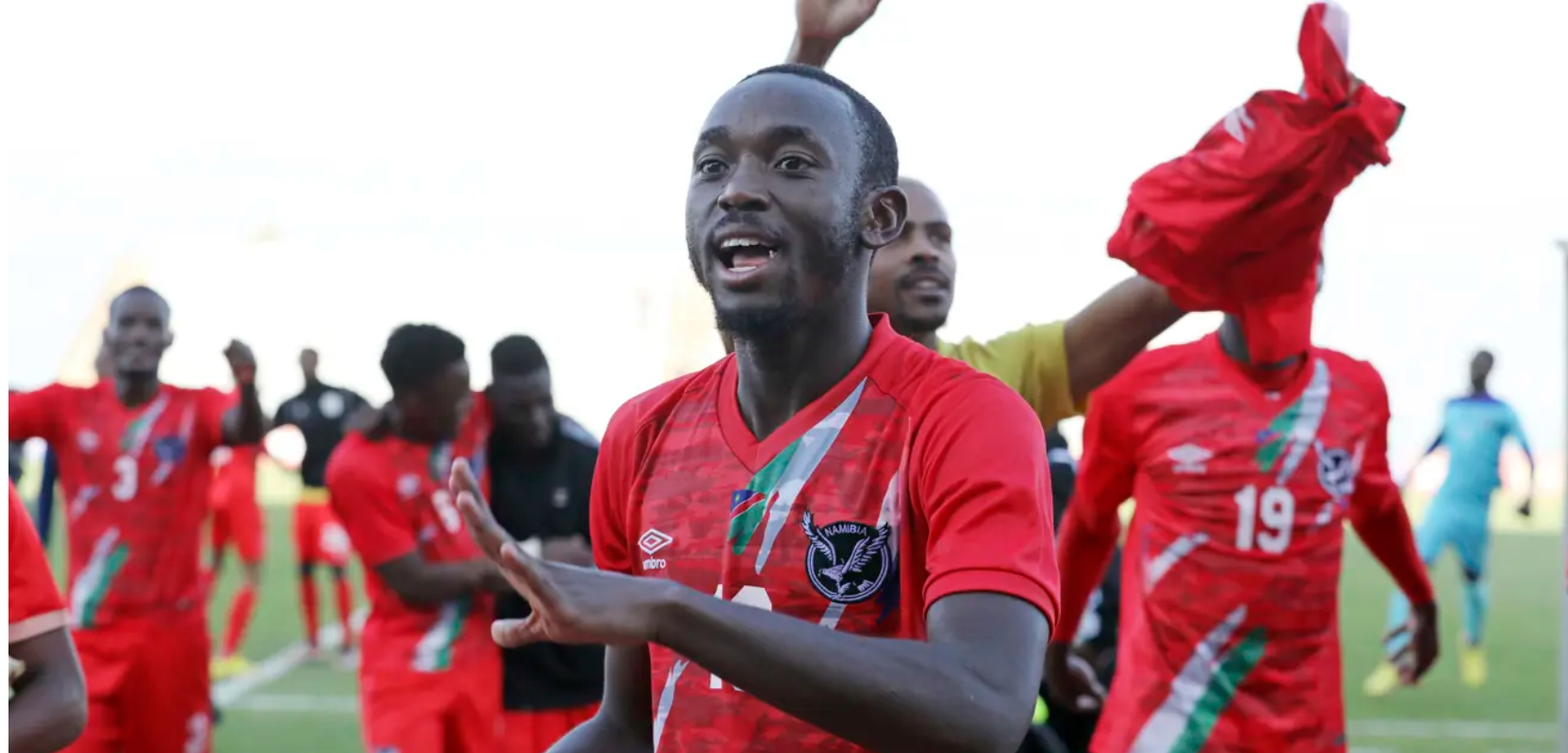
The COSAFA Cup: Regional Football With Real Weight
If AFCON represents the biggest continental stage for Namibian football, the COSAFA Cup has played a particularly important role in the team’s regional development.
The Council of Southern Africa Football Associations (COSAFA) brings together national teams from Southern Africa, giving players an opportunity to compete regularly against familiar regional opponents. For Namibia, the competition has provided both a testing ground and a source of some of the country’s most memorable football achievements.
The Brave Warriors reached the COSAFA Cup final in 1997 and 1999, establishing themselves as a competitive regional side before eventually going one step further. That breakthrough arrived in 2015.
Namibia defeated Mozambique 2-0 in the COSAFA Cup final, with Deon Hotto scoring both goals. It was Namibia’s first COSAFA Cup title and the country’s first regional championship in the competition. The achievement also illustrates why COSAFA matters to Namibian football. Success at regional level can provide international experience, strengthen squad confidence and create opportunities for players to perform in competitive environments before facing the continent’s strongest teams.
Namibia came close to adding another COSAFA title in 2022, reaching the final before losing 1-0 to Zambia after extra time. COSAFA’s records also list Namibia among the competition’s most frequent runners-up, with final appearances in 1997, 1999 and 2022.
In 2024, Namibia again reached the COSAFA semi-finals. The Brave Warriors defeated Seychelles 3-1 in the group stage, with Bethuel Muzeu scoring twice, before advancing to the last four as the best runner-up across the groups.
These results underline a consistent theme: Namibian football has often punched above its weight in Southern Africa.
Moments for history
The 1998 AFCON breakthrough
Qualification for the 1998 Africa Cup of Nations was one of the earliest landmarks in the history of the Brave Warriors.
The tournament also produced a memorable 3-3 draw with Angola. Namibia led 2-0 and later 3-1 before Angola fought back for a point. Although Namibia did not progress from the group, the match remains part of the team’s early AFCON history.
The 2008 return to AFCON
A decade later, Namibia returned to the continental finals in Ghana. COSAFA records describe the 2008 qualification as another instance in which the Brave Warriors upset expectations to reach Africa’s premier national-team competition. Again, the tournament experience ended in the group stage, but simply reaching the finals demonstrated that Namibia had established itself as a recurring presence in African international football.
The 2015 COSAFA triumph
The 2015 COSAFA Cup final was a different story. Namibia beat Mozambique 2-0, with Hotto scoring both goals, to lift the trophy for the first time. COSAFA described the achievement as one of the proudest moments in Namibian football history. Hotto would later become central to another historic chapter.
The night Namibia beat Tunisia
The most important result in Brave Warriors history arrived on 16 January 2024. Namibia faced Tunisia in their opening match of the 2023 AFCON finals. Tunisia entered the tournament as the more established continental side, having won the competition in 2004.
Namibia defended resolutely and restricted Tunisia’s attacking opportunities. Then, in the 89th minute, Deon Hotto ran onto a long ball, outpaced the defence and finished calmly to give Namibia a 1-0 victory. CAF described the result as one of the tournament’s major shocks. The significance was clear: after three previous AFCON appearances without a victory, Namibia had finally won a match at the finals.
And the story did not end there, Namibia subsequently drew 0-0 with Mali, a result that secured their first-ever qualification for the AFCON knockout stage. CAF reported that the Brave Warriors had become the first Namibian side to reach the last 16 of the tournament. The team’s run ended against Angola in the round of 16, but qualification for the knockout phase represented another milestone in the country’s football history.
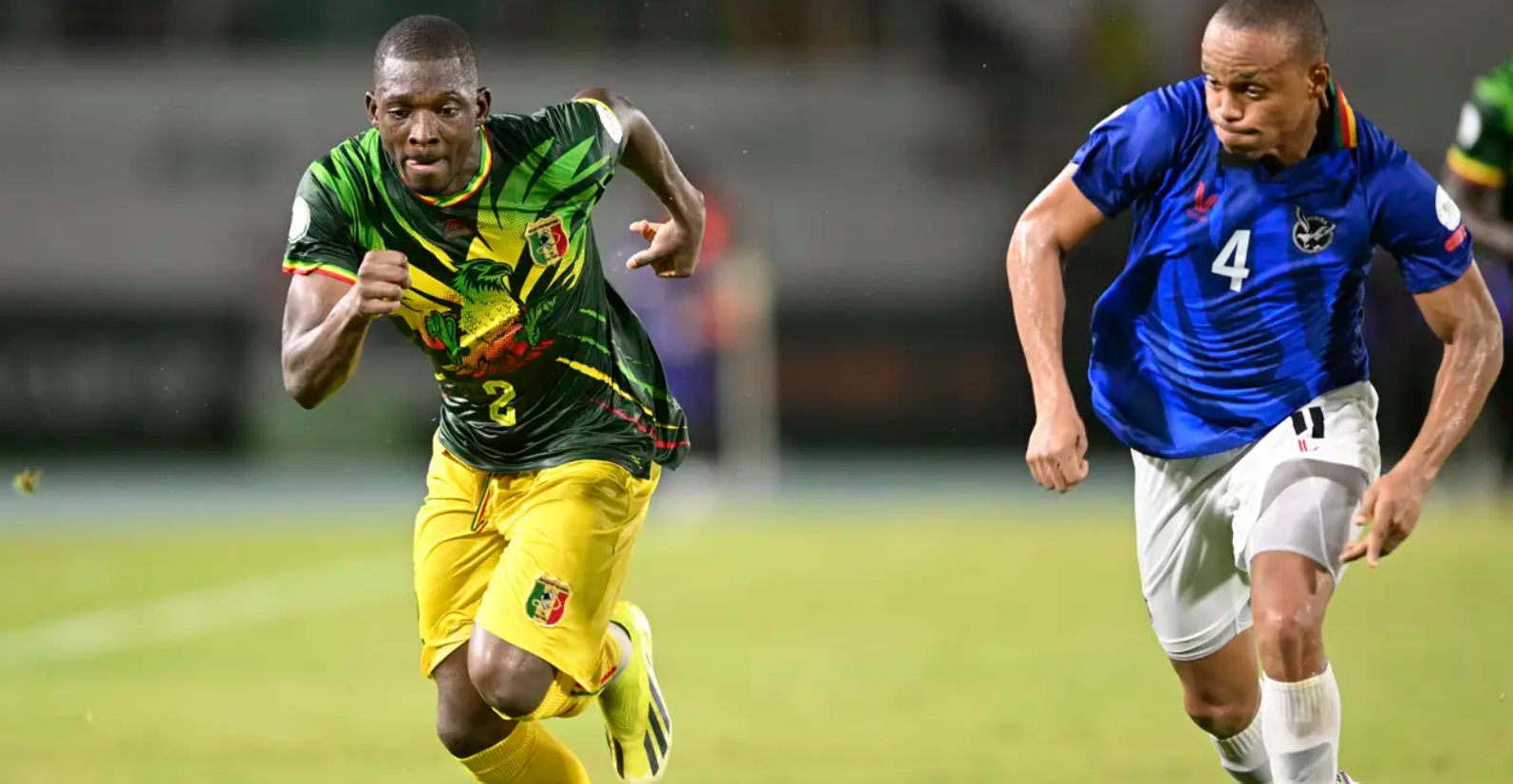
Namibian Talent and the Game Today
One of the most recognisable names of the modern era is Peter Shalulile, who has played a prominent role for both Namibia and South African club side Mamelodi Sundowns. Before the 2023 AFCON finals, CAF identified Shalulile as one of Namibia’s key players and noted that he had scored four of the country’s six goals during qualification. Deon Hotto is another important figure. His career has included top-level club football in South Africa, while his two goals in the 2015 COSAFA final and his historic strike against Tunisia in 2024 have given him a distinctive place in Brave Warriors history. The national team has also continued looking beyond established names.
In a 2025 World Cup qualifying squad, coach Collin Benjamin included a mixture of foreign-based professionals and players from Namibia’s domestic league. CAF reported that the 30-man squad contained 14 foreign-based players and 16 players from the Namibian league, illustrating the continued importance of both domestic and overseas pathways.Benjamin has spoken publicly about the importance of helping Namibian players reach stronger professional environments in Africa and Europe. In a FIFA interview, he said that increasing the number of full-time professionals would help raise standards within the national team. The challenge is not simply producing talented footballers. It is creating a sustainable system in which promising players can progress from youth and domestic football into professional careers.
That development work extends to younger age groups. Namibia hosted the COSAFA qualifier for the CAF African Schools Football Championship in Walvis Bay in 2024, with nine regional boys’ and girls’ teams taking part.
Infrastructure is another part of the equation. FIFA reported in September 2026 that more than US$4 million in FIFA Forward funding had supported infrastructure and national-team development in Namibia, alongside football education and capacity-building initiatives. There are still practical challenges. Namibia has played many home fixtures outside the country because of stadium requirements, something Benjamin highlighted when discussing the national team’s development.
The combination of player development, domestic football, infrastructure and international exposure will therefore remain important to the Brave Warriors’ progress.
Why Namibian Football Still Matters
The significance of Namibian football cannot be measured only in trophies. The Brave Warriors represent a country whose modern international football story developed relatively recently. Since the establishment of the NFA in 1990 and its FIFA and CAF affiliations in 1992, Namibia has gradually built a place for itself within African football.
The milestones have come in stages:
- AFCON qualification in 1998.
- A second AFCON appearance in 2008.
- A return to the continental finals in 2019.
- Namibia’s first COSAFA Cup title in 2015.
- A first AFCON finals victory against Tunisia in 2024.
- Namibia’s first AFCON knockout-stage appearance at the same tournament.
The next chapter is already underway.
Namibia began its 2027 AFCON qualification campaign in September 2026 with a 1-0 victory over Congo, Bethuel Muzeu scoring the only goal in Gaborone. The Brave Warriors then lost 1-0 to Comoros on 29 September, leaving Namibia, Comoros and Cameroon level on three points after two Group G matches, with Cameroon having played one fewer game.
That context matters. Namibia’s football journey has never been a straight line from breakthrough to sustained success. It has involved qualification, setbacks, regional achievements, rebuilding and new generations of players. What makes the Brave Warriors’ story distinctive is the distance travelled.
A team that once arrived at AFCON finals without a single tournament victory eventually defeated Tunisia, reached the last 16 and demonstrated that Namibia could compete on one of African football’s biggest stages.
For Namibian football, that 1-0 win over Tunisia was not the end of the journey. It was evidence of what years of regional competition, player development and national-team building could produce.
And as the Brave Warriors continue their pursuit of another AFCON appearance, the long-term story is bigger than any single result: it is the continuing development of football in Namibia.
Last updated: Sep 2026
Publisher
The BW Game Hub Sports Analysis Unit is the senior sports news desk at BW Game Hub, overseeing daily sports news coverage, football market analysis and legal updates across international jurisdictions. With a background in sports journalism and market research, the unit tracks player movements, league developments and operator news to bring readers real-time, verified insights.
